
Choosing an engagement ring is one of life’s most meaningful decisions. Lab grown oval engagement rings have emerged as a top choice for modern couples who value both timeless beauty and conscious luxury.
This comprehensive guide explores everything you need to know about lab grown oval diamond engagement rings—from their brilliant optical properties to pricing advantages, quality standards, and expert buying tips.
What Are Lab Grown Oval Engagement Rings?
Lab grown oval engagement rings feature diamonds created in controlled laboratory environments rather than mined from the earth. These lab-created diamonds possess identical physical, chemical, and optical properties to natural diamonds.
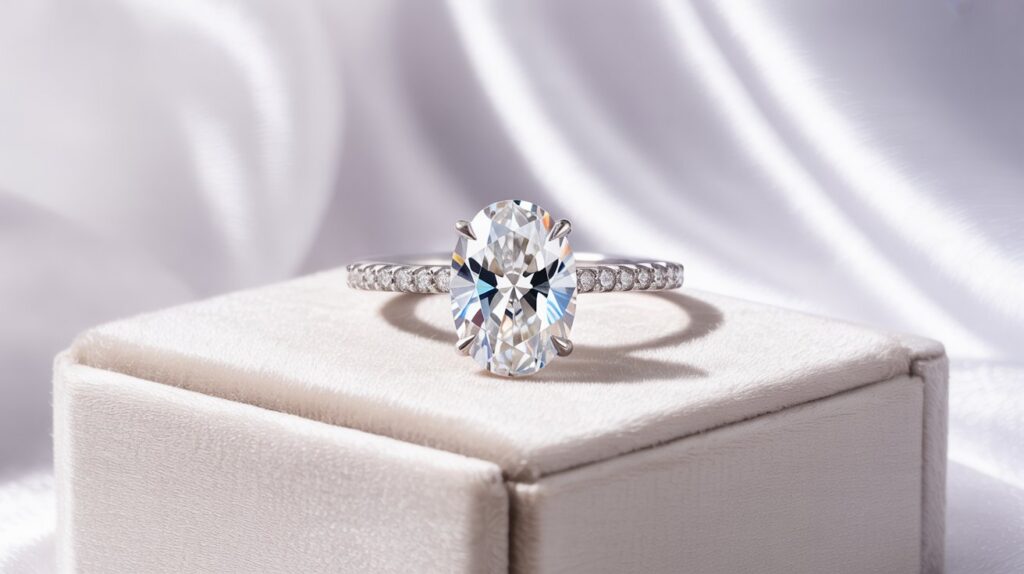
The oval cut—an elongated brilliant-cut shape with 56 to 58 facets—maximizes sparkle while creating the illusion of longer, more elegant fingers. When combined with lab grown technology, you receive a stunning diamond at significantly better value.
The Science Behind Lab Grown Diamonds
Lab grown diamonds are created using two primary methods certified by major gemological institutes.
CVD (Chemical Vapor Deposition) uses carbon-rich gases heated in a vacuum chamber, causing carbon atoms to crystallize on a diamond seed. This process typically takes several weeks and produces high-quality Type IIa diamonds.
HPHT (High Pressure High Temperature) mimics natural diamond formation by subjecting carbon to extreme pressure exceeding 1.5 million pounds per square inch and temperatures above 2,700°F. The GIA and IGI certify diamonds from both processes equally.
Both methods produce real diamonds with a carbon crystal structure rated 10 on the Mohs hardness scale—identical to mined diamonds.
Why Choose an Oval Cut for Your Lab Diamond Engagement Ring?
The oval diamond cut offers distinct advantages that make it perfect for engagement rings.
Oval diamonds create an elongating effect on the finger, making hands appear more slender and refined. The length-to-width ratio typically ranges from 1.30 to 1.50, with 1.35 to 1.45 considered ideal for balanced proportions.
With its modified brilliant-cut facet pattern, an oval diamond delivers exceptional light performance. The 58 facets maximize light return, creating brilliant white light reflection and colorful fire dispersion that rivals round brilliant cuts.
Oval diamonds appear approximately 10% larger than round diamonds of equal carat weight due to their elongated shape and larger surface area. This means a 2-carat oval lab diamond looks more substantial than a 2-carat round diamond, giving you more visual impact for your diamond.
The versatility of oval diamonds is another major advantage. They complement virtually every engagement ring setting style—from classic solitaires to vintage-inspired halos, modern three-stone designs, and minimalist bezels.
Lab Grown vs. Mined Oval Diamonds: Understanding the Differences
According to the FTC, lab grown diamonds are true diamonds. They share identical carbon crystal structure, hardness at 10 on the Mohs scale, refractive index of 2.42, thermal conductivity, and optical properties. The only difference lies in origin—one forms in weeks within a laboratory, the other over billions of years underground.
The GIA and IGI grade lab grown diamonds using the same 4Cs standards as mined diamonds. Cut quality examines proportions, symmetry, and polish. Color is graded from D (colorless) to Z (light yellow). Clarity ranges from FL (Flawless) to I3 (Included). Carat measures the weight in carats.
Lab grown oval diamonds typically cost 60-80% less than comparable mined diamonds. A 2-carat lab grown oval diamond with VS1 clarity and G color might cost $3,000-$5,000, while a mined equivalent could exceed $15,000-$20,000. This substantial price difference allows you to invest in higher quality grades or larger carat weights.
Lab grown diamonds require less land disruption and eliminate concerns about mining-related environmental impact. They offer full supply chain transparency—you know exactly where and how your diamond was created.
How to Choose the Perfect Lab Grown Oval Diamond
Selecting your ideal oval diamond involves understanding quality factors and personal preferences.
Evaluating Cut Quality
Cut quality determines how brilliantly your oval diamond sparkles. Look for excellent symmetry to ensure balanced light reflection and good to excellent polish to maximize surface brilliance. The ideal depth percentage falls between 58-62%, while table percentage should range from 53-63% for optimal light performance. Avoid diamonds with visible bow-tie effects—dark shadows across the center caused by improper cutting.
Selecting Color Grade
Lab grown diamonds offer excellent value in near-colorless grades. D-F colorless diamonds provide maximum brilliance with premium pricing. G-H near colorless grades offer excellent value and appear virtually colorless when set in white metals. I-J near colorless grades provide budget-friendly options with slight warmth barely visible to the eye. For white gold or platinum settings, G-H color grades provide ideal balance between beauty and value.
Understanding Clarity
Most eye-clean lab grown diamonds fall within VS1-VS2, where very slight inclusions remain invisible to the naked eye while offering excellent value. SI1 clarity diamonds are slightly included but often appear eye-clean in oval cuts, representing the best budget option. VVS1-VVS2 grades feature very, very slight inclusions and represent investment-grade clarity.
Oval cuts effectively hide inclusions due to their brilliant facet pattern, making VS2 or SI1 clarity grades smart choices that balance quality and affordability.
Choosing Carat Weight
The 1.0-1.5 carat range offers classic, elegant proportions perfect for everyday wear. The 1.5-2.0 carat range provides statement size with substantial presence that photographs beautifully. Diamonds over 2.0 carats create bold, show-stopping appearance ideal for those wanting maximum impact.
Remember that oval diamonds look larger than their actual carat weight, maximizing visual impact and allowing you to achieve a substantial look without the premium pricing of higher carat weights.
Popular Setting Styles for Lab Grown Oval Engagement Rings
The right setting enhances your oval diamond’s beauty while reflecting personal style.
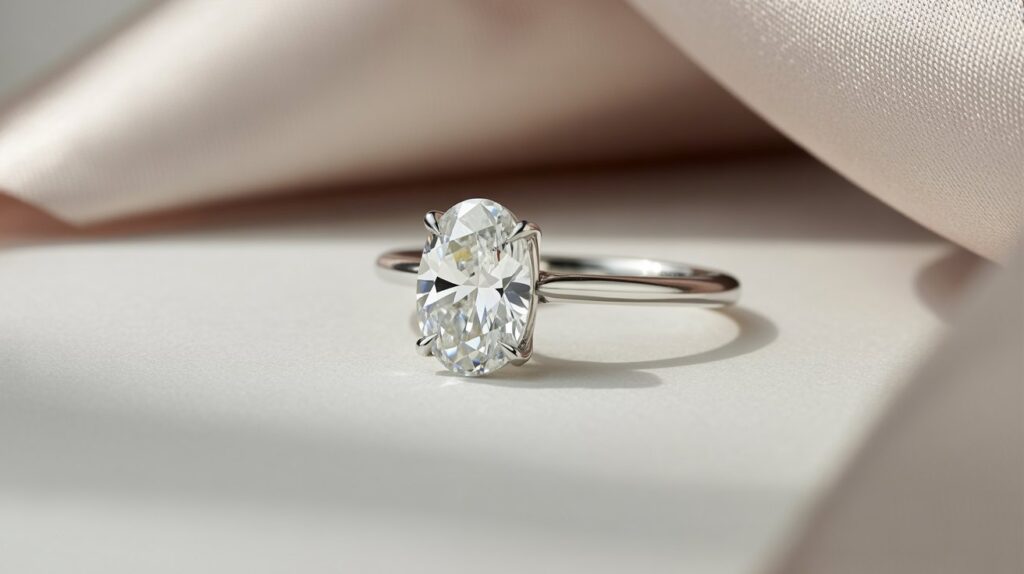
A classic solitaire with four or six prongs showcases the oval diamond with minimal distraction. This timeless style emphasizes the diamond’s natural brilliance and works beautifully with any metal choice, making it perfect for traditional elegance.
Halo settings feature a border of smaller lab grown diamonds surrounding the center oval, adding sparkle and making the center stone appear larger. Vintage-inspired halos often include milgrain detailing and intricate metalwork for romantic, glamorous aesthetics.
Three-stone designs use flanking diamonds or gemstones to represent past, present, and future. Tapered baguettes or smaller ovals complement the center stone elegantly, adding symbolic meaning and sophisticated style.
Hidden halo settings place diamonds on the underside of the center stone, creating sparkle from side angles while maintaining a clean top view. This contemporary option appeals to modern tastes with subtle glamour.
East-west settings position the oval diamond horizontally rather than vertically, creating a unique, contemporary look that’s gaining popularity among fashion-forward couples.
Metal Choices for Lab Diamond Oval Rings
White gold provides a similar bright white appearance to platinum at lower cost. It’s rhodium-plated to enhance whiteness and requires occasional re-plating over time to maintain its lustrous finish.
Yellow gold creates warm, vintage-inspired elegance that complements slightly warmer diamond colors naturally. It has seen a major resurgence in popularity among modern brides seeking classic sophistication.
Rose gold’s romantic pink hue from copper alloy provides modern sophistication. It pairs beautifully with all diamond color grades and offers excellent durability for everyday wear.
Lab Grown Oval Diamond Pricing Guide
Several elements influence lab grown oval diamond costs. Carat weight serves as the largest price driver with exponential increases at milestone weights. Color grade affects pricing significantly, with D-F commanding premiums over G-J grades. Clarity grade impacts cost substantially—FL-VVS2 diamonds cost more than VS1-SI1 grades. Cut quality matters, with excellent cuts commanding higher prices, and certification from GIA or IGI ensures quality.
Based on current market data, a 1-carat oval with G color, VS2 clarity, and excellent cut typically costs $800-$1,500. A 1.5-carat oval with similar specifications ranges from $1,500-$2,500. A 2-carat oval generally falls between $2,500-$4,500, while a 3-carat oval costs approximately $5,000-$8,000.
These prices represent significant savings compared to mined diamonds while delivering identical beauty and quality.
Quality Certifications and What They Mean
The GIA (Gemological Institute of America) is the most respected gemological laboratory worldwide. GIA reports include detailed 4Cs grading, proportions analysis, and fluorescence information, using “laboratory-grown” designation to distinguish origin.
IGI (International Gemological Institute) is widely recognized for lab grown diamond certification, providing comprehensive grading reports with detailed quality assessments and growing method identification.
Legitimate certification includes a unique report number, detailed 4Cs grading, diamond measurements, plotting diagram showing inclusions, proportion analysis, and origin disclosure. Always verify certification authenticity on the issuing institute’s website using the report number.
Caring for Your Lab Grown Oval Engagement Ring
Remove your ring during physical activities, cleaning, or applying lotions. Store it separately to prevent scratching from other jewelry, and avoid exposure to harsh chemicals or chlorine.
For at-home cleaning, mix warm water with mild dish soap. Soak your ring for 20-30 minutes, gently brush with a soft toothbrush, rinse thoroughly, and pat dry. Visit your jeweler every six months for professional ultrasonic cleaning and prong inspection.
Schedule annual professional inspections to check prong security, identify potential wear issues, re-polish metal surfaces, and verify diamonds remain secure.
Common Myths About Lab Grown Diamonds Debunked
The FTC confirmed lab grown diamonds are real diamonds with identical properties to mined diamonds. They’re not diamond simulants like cubic zirconia or moissanite—they’re genuine diamonds grown in laboratories instead of mines.
While diamonds generally aren’t investment vehicles, lab grown diamonds offer better initial value. You invest less upfront for the same quality, making them financially smarter choices for jewelry purposes.
Gemologists require specialized equipment to distinguish lab grown from mined diamonds. The differences are microscopic and don’t affect beauty or durability. To the naked eye, they’re completely indistinguishable.
Lab grown diamonds span all quality grades, from flawless to included, just like mined diamonds. Many lab diamonds are Type IIa—the purest diamond type, representing less than 2% of mined diamonds.
Why Lab Grown Oval Rings Represent Modern Luxury
Lab grown diamonds eliminate environmental concerns associated with traditional mining while requiring significantly less land disruption. They offer transparent supply chains that modern consumers demand when making significant purchases.
The substantial cost savings allow couples to choose larger, higher-quality diamonds within their budgets. You can select ideal cut, color, and clarity grades without compromising on the features that matter most to you.
Complete supply chain transparency ensures your diamond’s origin. Lab grown diamonds eliminate questions about mining practices and provide peace of mind about your purchase’s ethical implications.
As technology advances, lab grown diamonds represent innovation and progress. Choosing lab-created diamonds aligns with modern values while honouring traditional engagement ring symbolism.
Expert Tips for Buying Lab Grown Oval Engagement Rings
Research reputable lab diamond jewelers and compare pricing, certification, return policies, and customer reviews before deciding. Never purchase uncertified lab diamonds—independent GIA or IGI certification guarantees accurate quality grading and protects your investment.
Examine your diamond through detailed photography and video showing light performance. Reputable vendors provide comprehensive visual documentation that helps you make informed decisions from home.
Ensure your jeweler offers reasonable return windows and money-back guarantees. This protects your investment if the diamond doesn’t meet expectations upon arrival or if you simply change your mind.
Many jewelers offer custom design services that let you create a truly unique engagement ring reflecting personal style. Consider proper sizing before finalizing your purchase, remembering that wider bands may require sizing up for comfortable all-day wear.
Quality jewelers provide warranties covering manufacturing defects and prong damage. Understand what’s included and excluded in your warranty before making your final purchase decision.
Frequently Asked Questions
Are lab grown oval diamonds real diamonds?
Yes, lab grown diamonds are real diamonds with identical physical, chemical, and optical properties to mined diamonds. The FTC recognizes them as genuine diamonds, and major gemological institutes like GIA and IGI certify them using the same rigorous standards.
How much cheaper are lab grown oval engagement rings?
Lab grown oval diamonds typically cost 60-80% less than comparable mined diamonds. For example, a 2-carat lab grown oval might cost $3,000-$5,000, while a mined equivalent could exceed $15,000-$20,000.
What’s the best color grade for a lab grown oval diamond?
G-H color grades offer excellent value for lab grown oval diamonds. These near-colorless grades appear virtually colorless when set in white metals and cost significantly less than D-F colorless grades while maintaining beautiful appearance.
Do lab grown oval diamonds get cloudy over time?
No, lab grown diamonds maintain their brilliance permanently. They’re as durable and stable as mined diamonds, rated 10 on the Mohs hardness scale. Cloudiness only occurs from surface dirt, which regular cleaning easily removes.
What clarity grade should I choose for an oval lab diamond?
VS2 or SI1 clarity grades offer the best value for oval diamonds. The oval’s brilliant facet pattern effectively conceals inclusions, making these grades appear eye-clean while costing substantially less than higher clarity grades.
Your Perfect Lab Grown Oval Engagement Ring Awaits
Lab grown oval engagement rings combine timeless elegance with modern values. These stunning diamonds offer identical beauty and durability to mined diamonds while providing superior value, transparent origins, and sustainable luxury.
The oval cut’s brilliant sparkle, finger-flattering shape, and versatile style make it an increasingly popular choice. When you choose lab-created diamonds, you maximize quality and size within your budget while making an environmentally conscious decision.
Whether you prefer classic solitaires, romantic halos, or contemporary designs, lab grown oval diamonds deliver exceptional beauty that symbolizes your commitment. With proper certification from GIA or IGI, you can purchase with confidence knowing your diamond meets rigorous quality standards.
Ready to find your perfect lab grown oval engagement ring? Explore our stunning collection of certified lab diamond jewelry and discover exceptional quality at prices that let you celebrate your love without compromise.